Our work / Greater Montreal Hotel Association
How the AHGM took back its Hotelia Awards with its own AI-powered platform
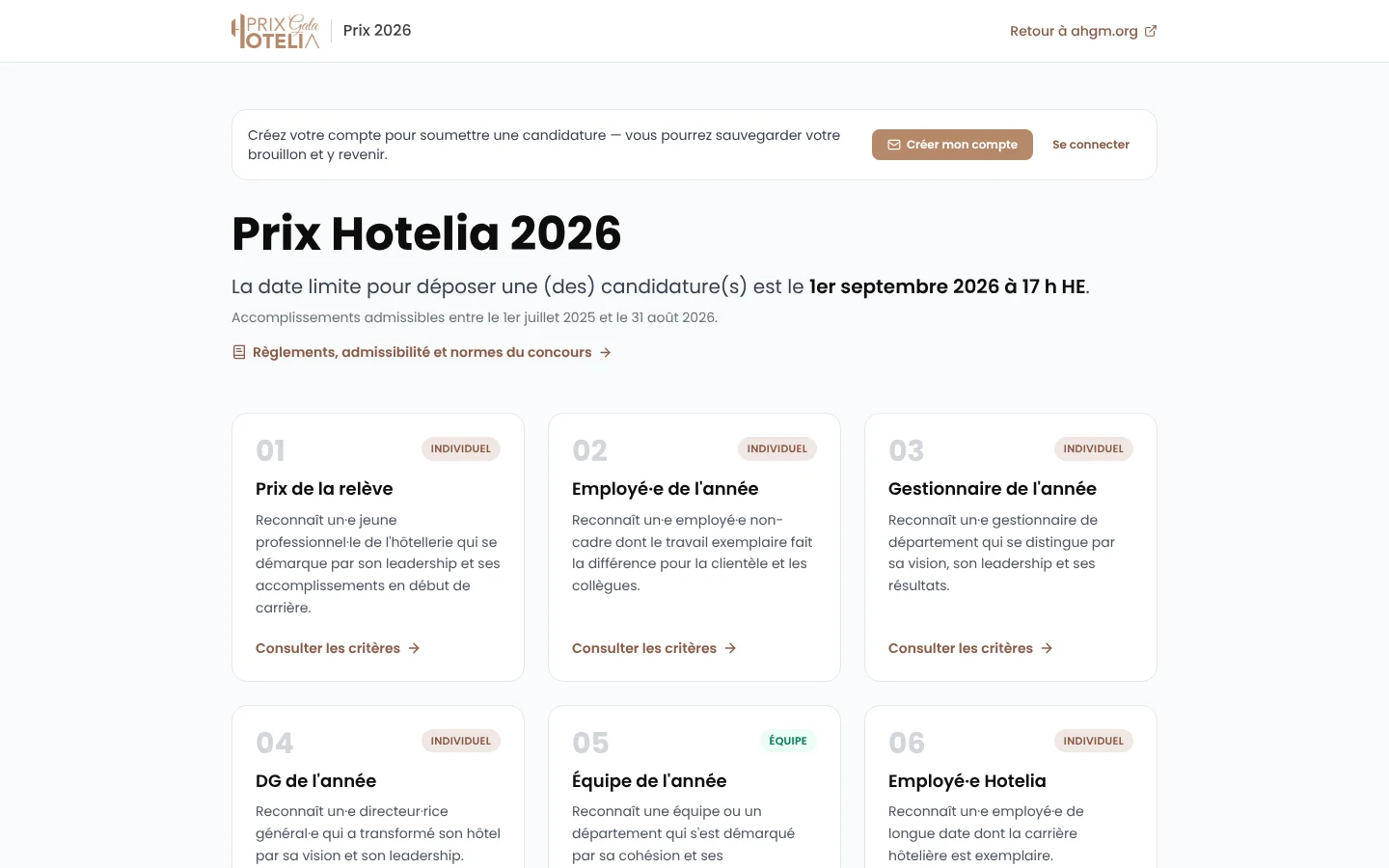
Every year, the Greater Montreal Hotel Association relied on outside help to compile the entries for its Hotelia Awards. After an AI assessment, Riyada built it its own AI-powered platform: entries, file tracking and jury, run by the team.
The project, expertise by expertise
What each of our four areas of expertise brought to this engagement. Our approach →
An assessment of six processes, then two priorities: the Hotelia Awards first, monthly statistics next.
ReadOne database for member hotels, entries, letters, photos and evaluations.
ReadA custom AI-powered platform: online submission, entry tracking, jury files generated by category.
ReadThe team manages every entry itself, and every piece of AHGM feedback was built in during the cycle.
Read
 Adoption and governance
Start from the processes, not the tools
The Greater Montreal Hotel Association (AHGM) represents the hotels of the metropolitan area. With a small team, it runs the Hotelia Awards, monthly statistics, a mentoring program and its members’ area.
The AI assessment reviewed six of the association’s processes and ranked them by impact and effort. The Hotelia Awards came out on top: over 100 entries handled by hand every year, a full week of outside work, and a process unchanged for two years.
Rather than adding licenses for general-purpose tools, Riyada proposed a private platform built around the AHGM’s own processes, able to grow one module at a time.
One database, from entry to jury
Before, each entry went from the form to a PDF export, then was copied by hand into a Word document. Support letters in PDF could not always be copied, incomplete entries were discovered late, and the jury received a paper binder.
The platform brings member hotels, entries, letters, photos and each category’s criteria into one database. Every entry knows what it is missing.
Submit, complete, judge
Hotels create an account, choose a category, save a draft and come back to it until the deadline. Email reminders go out when something is missing. In 2026, 84 entries came in this way, with no retyping.
The team tracks the status of every entry, moves an entry to the right category, replaces a letter or a photo, and keeps a record of every change.
For the jury, the platform produces one PDF file per category: table of contents, page numbers, letters included, large photos. Its layout was revised based on AHGM feedback.
A self-sufficient team, a platform that grows
The assessment had flagged a risk: AI use rested almost entirely on one person. The platform spreads the work: the communications team runs the awards, and everyone can see the status of every entry.
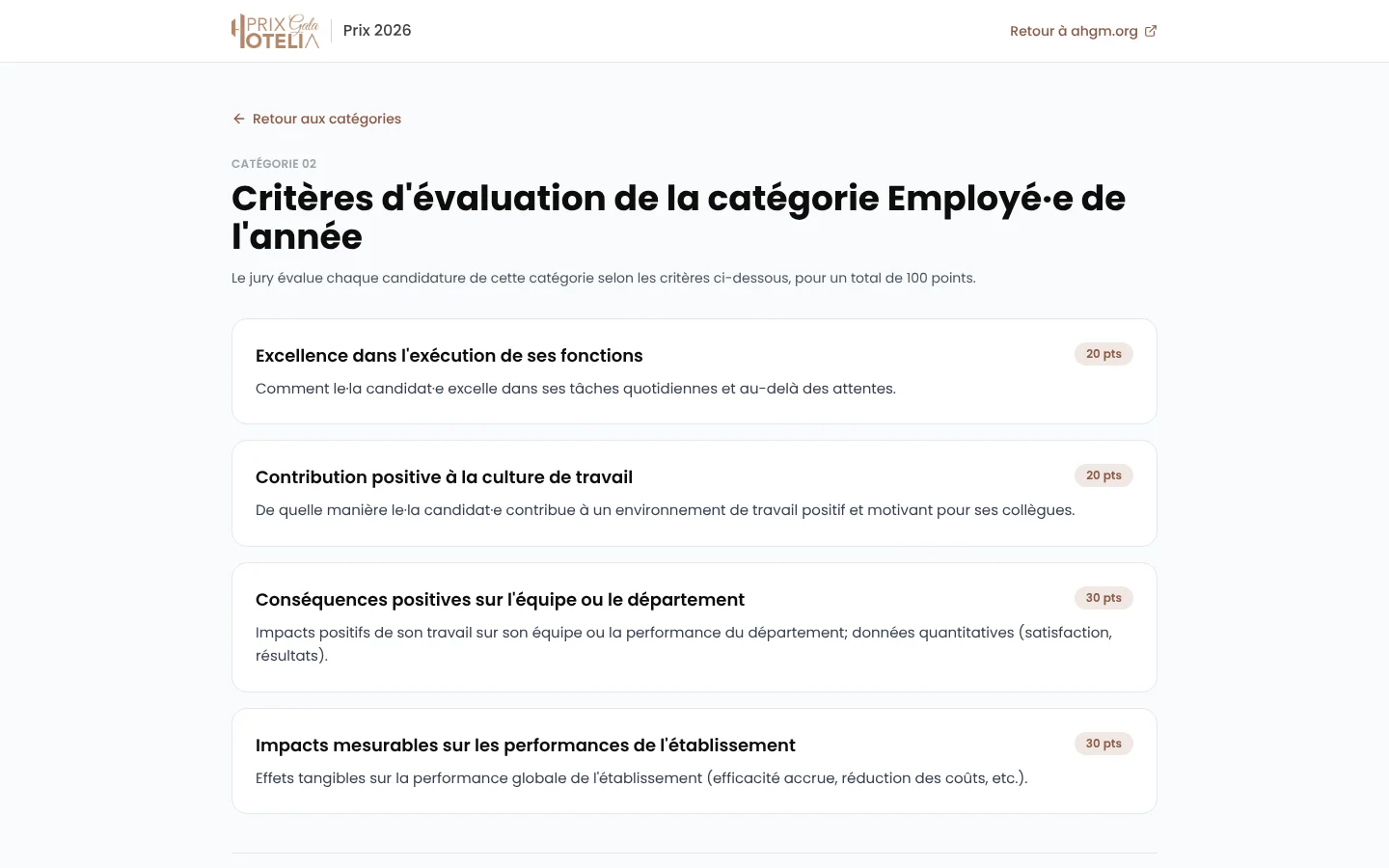
During the cycle, the team’s requests were built in as they came: viewable criteria, optional letters for team projects, file layout. The team now handles special cases on its own.
The same platform is designed to take on the assessment’s other processes, starting with the media library. The time saved on compiling remains to be measured over a full edition.
Delivered
- Online submission and hotel accounts
- Entry tracking and reminders
- Jury PDF files, by category
In progress
- The association’s media library
Planned
- Monthly statistics
- Member and access management
More of our work
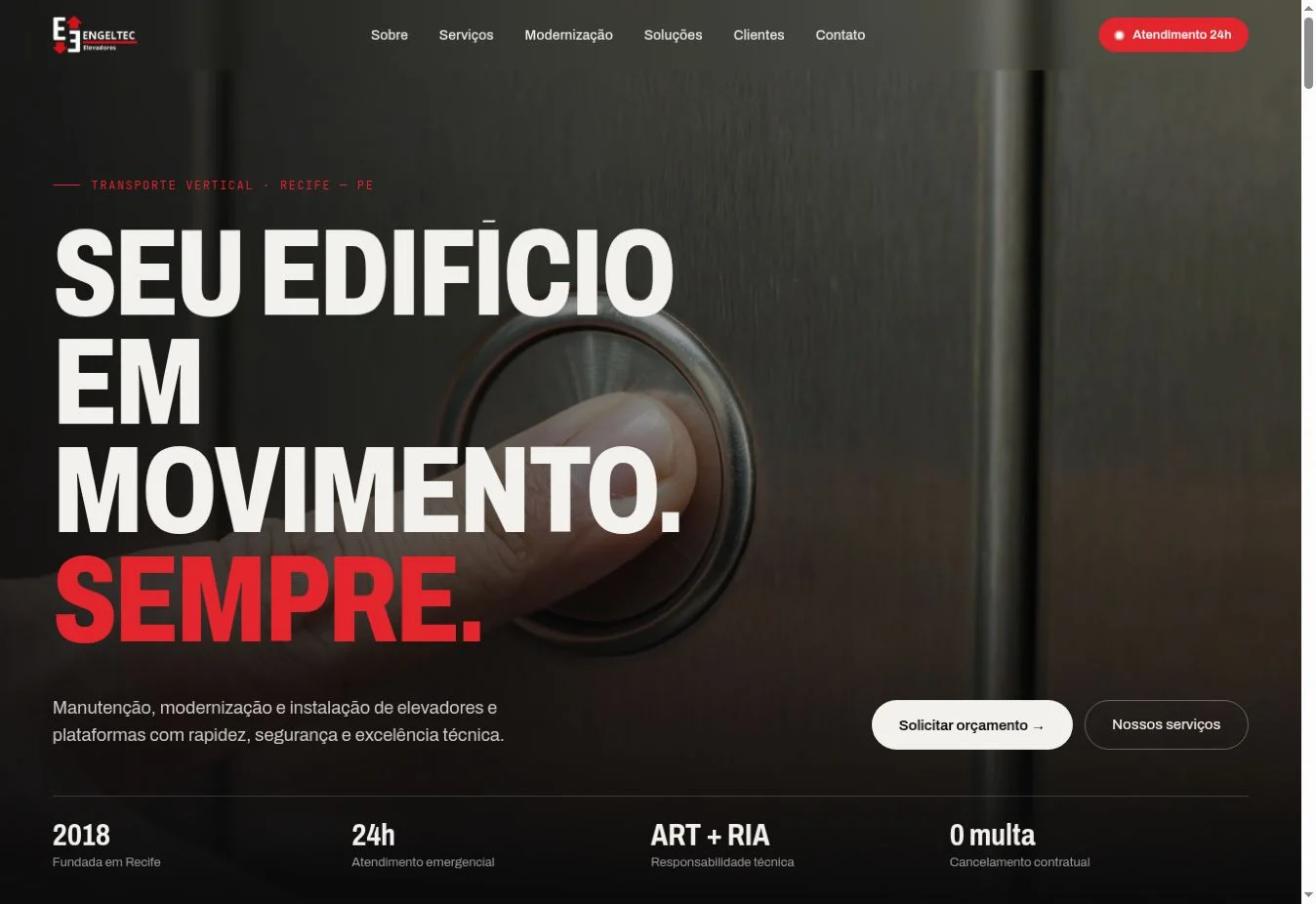 EngeltecHow Engeltec started its modernization with its online presence
 Strategy
 AI solutions
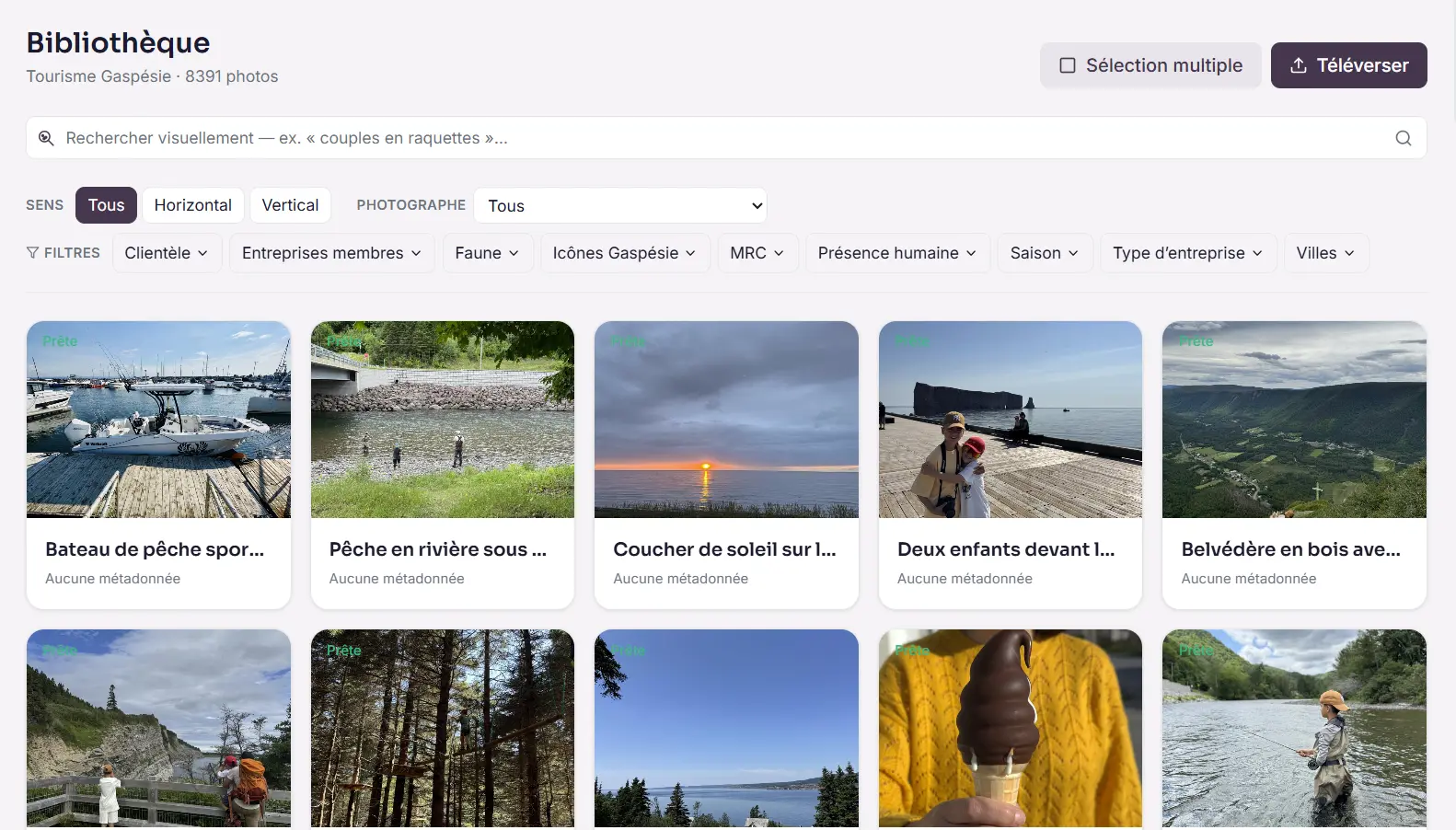 MosaïqueHow Tourisme Gaspésie’s photo library became a working tool
 Data
- AI solutions
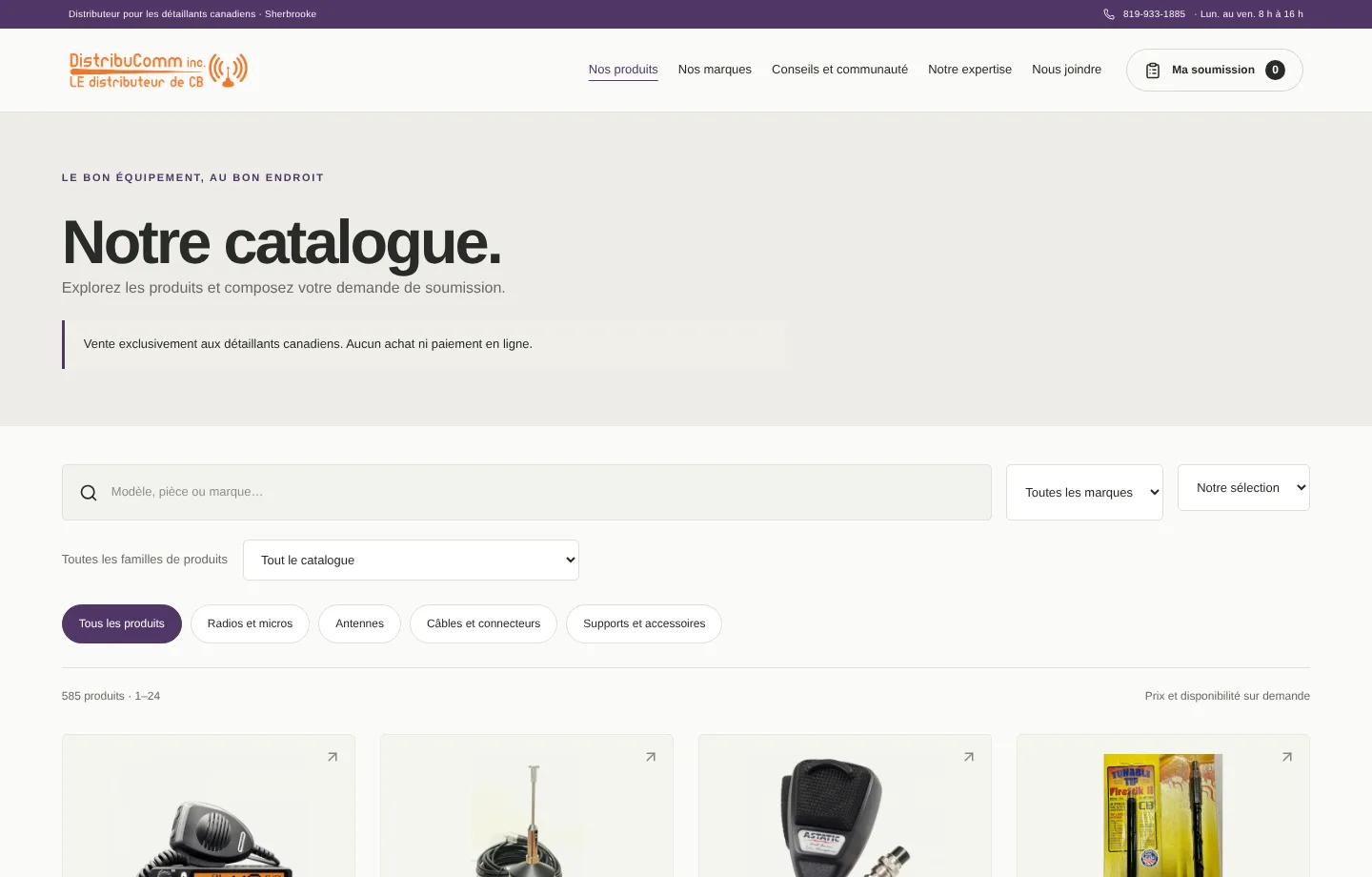 DistribuCommHow DistribuComm put its entire catalog online to sell by quote
- Strategy
- Data
- AI solutions